


Weathering centuries of pogroms, blood libels, Nazi massacres, and Soviet rule, the Jewish community of Ukraine has shown incredible resilience. Today, Ukrainian Jews face yet another test as they find themselves caught in a dangerous conflict. Read on for 13 facts about this courageous and incredible community.
1. Ukraine Has an Ancient Jewish Presence

Jews have called Ukraine home for a very long time! Small Jewish communities began settling in the region as early as the 10th century. Over the generations, these communities grew and flourished until, just before the Holocaust, Ukraine was home to the largest Jewish population in all of Europe.
Fun fact: A letter from the Jewish community of Kiev dating to the 10th century was discovered in the Cairo Genizah.
2. It Went by Many Names
If you have Ashkenazi ancestry, there's a good chance some of your family came from Ukraine. However, your ancestors might have known it by different names. Historic regions like Galicia, Volhynia, and Podolia were fully or partially within what is now modern-day Ukraine. And throughout history, different parts (or even all) of Ukraine belonged to other countries, including Russia, Poland, Lithuania, and Hungary.
3. The Chmielnicki Massacres Dealt a Severe Blow
In 1648–1649, Ukrainian Cossack forces led by Bogdan Chmielnicki launched devastating attacks on hundreds of Jewish communities across Ukraine and Poland. Tens of thousands of Jews lost their lives, and countless more were left homeless. Yet even after this terrible tragedy, Ukrainian Jews showed remarkable strength, recovering and rebuilding vibrant communities.
4. It Was the Cradle of Chassidism
Ukraine is where the Chassidic movement was born, and from where it influenced Jewish life and thought for centuries. Rabbi Yisrael Baal Shem Tov, the founder of Chassidism, taught and inspired from his Ukrainian town of Mezhibuzh. His successor, Rabbi Dovber, continued his work from Mezeritch—another Ukrainian town. Many other beloved Chassidic leaders brought spiritual warmth and light to the region, including Rabbi Levi Yitzchak of Berdichev, Rabbi Nochum of Chernobyl, and Rabbi Yisrael of Ruzhin.
Read: What Is Chassidism?
5. It Was Split by the Pale of Settlement
In 1790, Empress Catherine II of Russia restricted Jewish residence to the Pale of Settlement—a territory that included much of modern-day Ukraine (then part of the Russian Empire). This decree essentially divided Ukraine in half, restricting Jews to the western section. Even within the Pale, certain cities required Jews to obtain special residency permits, and Jews were barred from many professions. These restrictive rules stayed in place until the Russian Revolution in 1917.
Interestingly, you can still see traces of this division today. In the Sumy region, where the border of the Pale once ran, you might find one town with hundreds of years of Jewish history and active Jewish life. But drive just 30 minutes east, and you'll reach another town with only a small and recent Jewish presence.
Watch: Russian Jews Under the Tsar
6. The Kherson Colonies Provided Income for Thousands
Life under the Russian tsars made it incredibly difficult for Ukrainian Jews to make a living. To ease their plight, in 1815 Rabbi DovBer of Lubavitch (the second Chabad Rebbe) successfully convinced the government to let Jews establish farming colonies in the Kherson region of southern Ukraine. This opened up new opportunities; thousands of Jewish families moved there to escape urban poverty and began to earn a living through agriculture.
7. The Beilis Saga
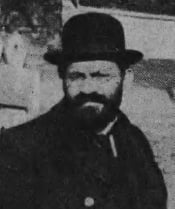
In 1911, a Jewish factory owner in Kiev named Mendel Beilis was falsely accused of murdering a non-Jewish child. Taking advantage of local widespread antisemitism, the press revived the ancient and false “blood libel”—the hateful claim that Jews used Christian blood in their rituals. The public trial received national attention and ultimately resulted in Beilis’s narrow acquittal. But the shock remained, as Jews realized that modern society could still entertain such primitive antisemitic ideas.
8. It’s the Birthplace of the Rebbe
Rabbi Menachem M. Schneerson, of righteous memory, known simply as “the Rebbe,” was born in 1902 in Nikolayev, Ukraine, where his grandfather served as the town's rabbi. Six years later, his family moved to Yekaterinoslav (today called Dnipro), where his father, Rabbi Levi Yitzchak Schneerson, had been appointed rabbi. Rabbi Levi Yitzchak was one of the leading rabbinical authorities in Ukraine, until the Soviets imprisoned him in 1939.
9. The Holocaust Decimated Ukrainian Jewry
When Nazi Germany invaded the Soviet Union in the summer of 1941, they began systematically murdering Ukraine's Jewish population. With help from local Ukrainian collaborators, special German killing squads called Einsatzgruppen rounded up the Jews of each town and city and shot them in mass graves, often in nearby forests. These tragic killing fields are found throughout Ukraine. Babi Yar, just outside Kiev, is among the most well-known—there, over 30,000 Jews were murdered on Yom Kippur of 1941.
10. Judaism Survived Against All Odds
Despite the horrors of the Holocaust and decades of Soviet repression, Jewish life in Ukraine has made an incredible comeback! Today, Ukraine is home to 350,000 Jews with a thriving Jewish infrastructure that includes synagogues, mikvahs, Jewish schools and yeshivahs, kosher restaurants, and organizations providing social services. In fact, Ukraine doesn't just serve its own Jewish community—it also produces religious items like hand-baked matzah, tefillin, and mezuzot that are shipped to Jews around the world!
11. It Boasts the Largest Jewish Community Center in the World

If you’re ever in the city of Dnipro, make sure to visit the Menorah Center! This massive complex, the largest Jewish center in the world, spans 500,000 square feet and is named for its distinctive seven-tower structure that resembles a menorah. Run by Chabad of Dnipro, it includes a large synagogue, several kosher restaurants, a kosher supermarket, a Judaica store, a Holocaust museum, two hotels, a concert hall, and much more.
Dnipro is just one of over 30 Ukrainian cities and towns with a Chabad presence. Close to 200 Chabad couples serve Jewish residents throughout the country.
Read: In Chaos of Ukraine, Dnipro Stands as a Beacon of Refuge
12. Famous Gravesites Dot the Landscape
Many revered Chassidic Rebbes are buried in Ukraine. Although the Chabad Rebbes lived in Belarus (White Russia), two are buried in Ukraine: Rabbi Schneur Zalman (the Alter Rebbe) in Haditch, and his son Rabbi DovBer (the Mitteler Rebbe) in Niezhin. The gravesites of the Baal Shem Tov, the Maggid of Mezritch, and many other Chassidic masters draw visitors from around the world. Notably, the resting place of Rabbi Nachman of Breslov in Uman attracts tens of thousands of pilgrims who gather there to celebrate Rosh Hashanah each year.
13. The War Has Brought New Challenges
In February 2022, war broke out between Russia and Ukraine, and life for Ukraine's Jews has never been the same. Tens of thousands fled the country, rebuilding their lives as refugees in new places. The majority who remain live with constant fear of attacks and shortages of basic necessities.
But one thing is certain: With a long history of overcoming unimaginable challenges, Ukraine’s Jewish community is sure to prevail, grow, and flourish.
Read: The Jews of Ukraine Mark a Year of War and Resolve
To donate to the Ukrainian Jewish Relief Fund, click here.


Vladimir Zelenski is Jewish himself. He is doing a fine job in opposing Russia's attempts to re-annex Ukraine.