


It was 8 o'clock on a Wednesday evening, late in June 1975. The main hall of 770 Eastern Parkway was filled with excited attendees who had been notified of this surprise gathering only four hours earlier. Little did they know that within the next two hours, the Rebbe would launch two more of his iconic mitzvah campaigns: the kosher campaign and the “family purity” campaign. These would be numbers seven and eight in the now-famous ten-point mitzvah campaign for spreading Jewish awareness and observance.
The first campaign was launched back in 1967 when the Rebbe encouraged Jewish men to put on tefillin in response to the fearful situation in Israel at the time. What followed was the miraculous and historic victory now known as the Six-Day War. And again, leading up to the 1973 Yom Kippur War, the Rebbe launched several more mitzvah campaigns, including the mezuzah campaign, tzedakah campaign, and Shabbat candle campaign.
While the military was drawing up strategic plans for victory, the Rebbe was doing the same. Although matters would materialize on the physical battlefront, the Rebbe knew that the first step to victory is strengthening the observance of Torah and mitzvot.
And while these latest two campaigns were not inspired by actual war, they were important steps forward in the Rebbe’s war on assimilation.
The Spiritual Battle for the Jewish Soul
On that warm summer night, the Rebbe raised a question: Why has there been a great spiritual decline in recent times? What is the cause? Drawing from various sources in Torah, the Rebbe explained that it could be attributed to the neglect of two mitzvot which have a major influence on the human body, both of which are at the core of the Jewish home.
Taharat Hamishpachah, “family purity,” is the term given to the body of laws that govern when a husband and wife may be physically intimate. The couple physically separate from the onset of menstrual bleeding and reunite after the woman’s immersion in a mikvah, a ritual pool of water.
This is essential for the spiritual sensitivity of the soul born through this union. The Rebbe went on to explain that the parents’ adherence to this system can affect both the child’s physical and spiritual health. Moreover, the future of the whole Jewish People depends on it.

This is not unlike the other campaign the Rebbe launched that night: a kosher diet. There are Torah sources and medical studies that show how the foods we eat affect our bodies. Healthy eating leads to a healthy body; you are what you eat.
Kosher food is more spiritually refined. Eating “coarse” foods, such as the meat of a nonkosher animal, for example, would transfer the character of the beast into the person eating it. Following a kosher diet is G‑d’s way for maintaining spiritual sensitivity.
The Rebbe argued that, on the whole, the precipitous spiritual decline of the Jewish people could be traced to the neglect of these two mitzvahs, both of which are the cornerstone upon which the next generation of Jews is built.
Laying the Groundwork
Historically, wherever Jewish people have gone, they’ve constructed mikvahs even before establishing synagogues. These mikvahs can be found in the ancient ruins of Masada, the cobbled alleys of medieval France, and the sweltering remnants of colonial-era Caribbean.
When the Jews arrived on American shores, they built mikvahs as well. But as the decades wore on and the 19th century gave way to the 20th, the mikvahs, many of them modest affairs to begin with, were neglected. Spoken about only in privacy, they were barely known by the next generation of American women, even those who made every effort to otherwise maintain full Jewish lifestyles.
On May 11th, 1930, the Sixth Rebbe was visiting the Jewish community in St. Louis, Missouri—one of the last stops along his eight-month tour of the United States. That evening, the Rebbe was to publicly address the community.
As he walked into the packed Shaarei Tzedek shul, there was a loud noise. Someone was rapping on a bench in the women’s gallery.
Hearing the commotion, the Rebbe looked up at the balcony, where a group of women called out to the Rebbe and the whole assembly that the community needed to build a new mikvah. The Rebbe agreed with them and advised that a committee should be formed for this purpose. The Rebbe later met with the committee and shared that he would help the women with their fundraising efforts, which he did.
Less than a month later, the Rebbe encouraged a Jewish community leader in Chicago to follow the example of St. Louis and establish a mikvah committee. In that letter, the Rebbe lays out a plan for the committee to improve the dire state of Taharat Hamishpachah:
The objective of the committee is twofold: To gather together women who observe Taharat Hamishpachah. To reach out to the youth and encourage them to join the committee.
The methods for each objective are likewise twofold:
- The written word: Send out essays, booklets, and letters in the mail. Recently, a group of young activists went door to door, collecting people’s information, including their names and addresses, and sent them articles on the topic. The results proved very successful, and many women began going to the mikvah.
- Public addresses should be held in shuls and at organized conventions with speakers that people relate to. They tell me that here (in New York), there is someone by the name of Dr. [Jacob] Smithline, the author of the essay (mentioned below), who spoke about Taharat Hamishpachah from a medical perspective and many attended. He divided his lecture into two parts, one addressing women and the other addressing men.
The main thing is that the women must take the initiative upon themselves and find young women who will have a great influence on their friends, with the help of G‑d. We have already seen great success when they organized the committee and took responsibility for the work.
I have encouraged my good friend Dr. Young to write an essay in English on the topic of Taharat Hamishpachah, and I have done the same with Dr. Smithline, and he wrote a popular essay that received much acclaim, as it is quite effective …
I am going to send you 1,000 copies of Dr. Smithline’s essay and 100 copies of Dr. Young’s essay. It is my opinion that they must be sold for five cents, because in America, they don’t read anything that doesn’t cost money. Print “Price 5 Cents” on each one, and the earnings will go to the Taharat Hamishpachah fund.”

Dr. Jacob Smithline was a physician and internationally acclaimed activist for Taharat Hamishpachah, who lived in Boro Park. At the Rebbe’s request, he wrote an essay in English about Taharat Hamishpachah from a medical perspective, published in 1930. Soon afterward, it was translated into Yiddish and distributed by the Rebbe and others. The essay had a ripple effect, and other Jewish doctors also began writing about the topic.
While the Rebbe made it clear that Torah—G‑d’s eternal wisdom—does not need scientific support, he foresaw the positive effects it would have, and encouraged such articles to be written and disseminated.
Not long after, Rabbi David Miller published a book that not only described the importance of observing the mitzvah but also included a detailed manual on the construction of personal mikvahs. The step-by-step guide provided a list of materials necessary for assembling a mikvah, the measurements and cost of each item, and diagrams portraying the different stages of construction. The objective was to demonstrate to the Jewish reader how simple it was to create a mikvah from scratch at a low cost, with the hope that more American Jews would observe Taharat Hamishpachah.
The efforts crossed borders and even continents. The Rebbe wrote to an activist in Petach Tikvah, then in Mandatory Palestine:
… It is imperative for the wives and daughters of chassidim to stand at the frontlines to strengthen Jewish observance in general, especially in the area of Taharat Hamishpachah. This area must be taken entirely in their domain, to found an organization for this purpose … one woman must inspire her friend, and that friend will inspire another friend, and together they will inspire their husbands, sons and daughters …

The Need Intensifies
The revival of Taharat Hamishpachah in America and abroad was underway.
With millions of Jewish immigrants fleeing war-torn Europe, America’s Jewish communities were changing, with an influx of mikvah-observant families eager to continue the traditions of their ancestors.
The Sixth Rebbe passed away in 1950 and was succeeded by his son-in-law, the Seventh Rebbe.
And like his predecessor, the Rebbe took a keen interest in encouraging the building of modern, beautiful mikvahs. To do so, the Rebbe used every avenue available to him, both direct and indirect.
As early as 1944, the Rebbe wrote to a communal leader in Wellington, New Zealand:
We were gratified by your informing us that a committee has been organized for the purpose of building a mikvah in your city … Certainly, you know that this is a matter of life and death, which must be sped along as quickly as possible, not to be delayed at all. There is no doubt that if they devote themselves to the task with proper zeal, they will bring the matter to fruition.
While a 1958 article in the Jewish Post and Opinion reported that there were “about 175 mikvahs in 40 states today,” many of them were severely undermaintained and underused.
In a 2013 interview with Chabad.org, Diane Margolis, a longtime resident of Manitowoc, Wisconsin, recalls the mikvah maintained by her father, Nash Muchin, whose family were Chabad chassidim who’d migrated to Wisconsin around the turn of the century. “It was dark and dank—a dungeon—and the heater broke right before my wedding. In the gentle manner of a father speaking to his daughter, he said, ‘You swam in Lake Michigan, you can go to the mikvah.’”
Margolis, who passed away in 2022, had the pleasure of seeing the region served by a brand-new, modern mikvah, built by the local Chabad emissaries as part of the Rebbe’s campaign.
In 1967, when the Rebbe learned that the late Rabbi Dov Zlotnik had spoken on the topic of mikvah at the Conservative JTS, he pushed him to publish the sermon. Thanks to the Rebbe’s prodding, the paper was published in a book of the year’s best sermons, and copies were sent to every Conservative rabbi.

A year later, the Rebbe pushed him to contact the late Rabbi Adin Even-Israel and have it translated to Hebrew, which he did.
Eventually, Zlotnik learned that a mikvah had been built in Canada as a result of his sermon. A community in Canada wanted to build a mikvah, but they didn’t have enough money. They turned to the Conservative congregation, but the leadership felt that it was not an important issue for the Conservative movement and declined to contribute. But around this time, a physician in that congregation got hold of the sermon and said, “How can you say this is not an important issue? Here is a rabbi at JTS who devoted a whole sermon to it!” He passed the sermon around and they reconsidered their decision, ultimately helping to build the mikvah.
Of special note were the efforts of the Chabad emissaries in Long Beach, California, whom the Rebbe urged to construct a mikvah and even donated toward the expenses.
The result was so beautiful that people came from far and wide to tour it and blueprints were sent to communities so that they could adapt and replicate it. One major step forward in Long Beach was the installation of a rabbinically approved filter, which allowed for the water to be cleaner and more attractive.
Having seen success in many instances, the Rebbe was now poised to turn his efforts into a global campaign, making it the mission of each and every person, not as a private individual, but as a member of the Jewish community.
Through his efforts, the directory maintained by Mikvah.org now has more than 1,200 listings, from Hong Kong to Hawaii, and from New Zealand to Zimbabwe.
The Campaign Progresses
Already on the 12th of Tammuz 1968, the Rebbe began to frame a new era of women's leadership. Times had changed, he noted. In the old country, communal responsibilities were often carried out by men, but now, especially in America, these responsibilities were increasingly managed by women. This shift, the Rebbe explained, was not a diminishment of tradition but an expression of women’s inner regality. With that, he emphasized, came great responsibility, great merit, and, most importantly, great Divine assistance to accomplish far more than before.
It was in this spirit that the Rebbe launched the two new campaigns: Taharat Hamishpachah (“Family Purity”) and the kosher campaign.
The challenge was immediately taken up by the women of N’shei U’bnos Chabad, the Chabad women’s organization which had been formed at the Rebbe’s call in 1952, with chapters in Montreal, Toronto, Chicago, Cleveland, Cincinnati, Dublin, London, and many more locations all over the globe.
In response to the Rebbe’s call, a group of women immediately gathered at the Crown Heights home of Chaya Sara Zarchi, whose leadership continues to this day. This was the founding meeting of the Taharat Hamishpachah committee, headed by Rochel Altein, who subsequently passed on her position to Chave Hecht. The group immediately got to work thinking of the best way to educate Jewish women about Taharat Hamishpachah.
The Rebbe closely monitored the organization's progress throughout the years, giving detailed instructions. For example, the Rebbe advised that the colors red or black shouldn't be used in the design of a certain booklet they were preparing for publication; instead, they should use softer, more feminine colors.

On the first day of the month of Elul, a few weeks after launching his campaign, the Rebbe expanded it further. He addressed an often-overlooked demographic—older women who had already reached menopause. They, too, he urged, should be encouraged to observe the laws of Taharat Hamishpachah at least one final time in their lives.
Approximately one year into the campaign, the Rebbe addressed an issue that was weighing on the hearts of many. With the success of the outreach, they felt regret. They had birthed children without availing themselves of the benefits of Taharast Hamishpachah. Was there nothing they could do now to bestow those benefits on their children?
“We must encourage those who haven’t gone to mikvah until now to go,” the Rebbe declared. “Although their children are fully kosher Jews, they should correct their past.” He explained that teshuvah means both regret over past actions and a positive resolution for the future. Not only should these women move forward with care and vigilance, but they should also influence others to observe the laws of Taharat Hamishpachah.
Later that year, the Rebbe turned his attention to the practical progress of construction efforts. A committee had been formed to build mikvahs, but, he noted with disappointment, the results were lacking. In Boston—a city with many rabbis—the mikvah had been repaired, but the work was done quietly. “There’s no use in keeping mikvah construction private,” the Rebbe said. “When there is a mikvah, you must announce to the public how beautiful it is, and that it’s free or costs very little to use. Many women will then come. But if it’s kept quiet, the mikvah is of no use, because women will be too ashamed to ask where it is.”
Then, on the eve of 14 Kislev 5739 (1979), the Rebbe called on married women to take an active role in outreach. “They should ensure that classes on the topic are taking place,” he said, “and teach it in the best and most thorough way.” This included publishing the laws and customs of Taharat Hamishpachah in the native languages of the women being reached—as had already been done in several countries.
The Rebbe emphasized that all written material must be edited by someone fully proficient in halachah, and written by a professional with a strong command of the language. The Rebbe urged the inclusion of a directory listing the exact addresses of mikvahs in the booklets, so that women could choose the mikvah they wanted to go to.
Why all the effort? Because, as the Rebbe made clear, “The conception and birth of Jewish children depend on it.”
The Efforts Take Shape
As Jewish people moved out of the cities and into the suburbs, they left behind many of the synagogues built in the first part of the 20th century. And while the mikvahs in those synagogues were aging and poorly maintained, many of the new synagogues being built had none at all.
After all, the planners reasoned, few of the modern, young couples would want to engage in a ritual that seemed so outmoded.
A case in point was Côte St. Luc, a heavily Jewish suburb of Montreal, which was home to several large congregations but no mikvah.
The closest mikvahs were several miles away in the Young Israel of Montreal and the “old neighborhood” of Outremont, but they needed repair and weren't very attractive.
Rabbi Itche Meir Gurary and his wife, Chana Gurary—whose mother, Rochel Altein, led the international campaign—decided that the Jewish community of Montreal would build a beautiful new mikvah as a gift for the Rebbe’s 76th birthday.
As the Rebbe was entering his 77th year, they launched a campaign to raise $77,000. Each family was encouraged to donate $1000, which was payable over five years if needed.
To accommodate the differing customs of Montreal’s Ashkenazic, Sephardic, and Chassidic communities, the mikvah was to be built in a fashion that would include all halachic stringencies, with a rainwater reservoir under the pool, and another to the side.
The Rebbe personally donated toward the mikvah’s decoration, and his money was eventually used to purchase plants to beautify the new mikvah.
When it came time to choose a location, they chose a lot right off a public street in Côte St. Luc. Positioned in a semi-commercial area, along a bus route, it was a perfect location for easy accessibility.
Many, including the mayor of Montreal, attended the mikvah's grand groundbreaking on Lag BaOmer 1979.
In addition to the fundraising and construction committees, there was also a group focused on advertising the new mikvah.

Even after the mikvah was completed in 1980, the advertisements still appeared in The Canadian Jewish News and other news publications, as well as on the radio. “Mikvah Myth No. 86: I don't keep Shabbos, so why should I go to Mikvah?” read one creative advertisement. “Mikvah Myth No. 2: None of my friends use it,” reads another.
What started as a clever tactic to raise money developed into a series of insightful facts debunking commonly-held mikvah myths. Soon, interesting mikvah quizzes were published as well. More than simply notifying people about the new mikvah, the advertisements taught them about Taharat Hamishpachah, simultaneously removing many old stigmas that discouraged its observance.
As the mikvah went up, the community watched. Mrs. Gurary recounts how she would bring her children to observe the mikvah's construction progress every Sunday. It was a learning experience for everyone. One Jewish student studying at McGill University even became Torah observant after further studying the significance of mikvah.
On the fifth night of Chanukah, the mikvah was finally completed. Over 1,000 people signed the guest book at the open house that evening and were shown a video presentation.
The mikvah was supposed to open a few days later, but a woman who needed a mikvah sooner refused to use any other mikvah except the new one. Realizing the urgency of the situation, the mikvah committee immediately got to work. Together, the women scrubbed the construction site clean, filled up the water, and prepared the mikvah for use.
It started with 25 appointments a week and grew to accommodate more than 25 a day.
But it didn't end there. One day, a woman who taught at the Sunday Hebrew school at the Conservative synagogue thought of a great idea. Seeing that the mikvah was the topic of communal discourse and celebration, why not organize a tour? After some planning, she gave the congregation’s Bat Mitzvah Club a tour of the new mikvah—along with their mothers too.
The modern mikvah not only united the diverse Jewish communities in Montreal, but was a catalyst for future mikvahs as well. Today there are 11 in Montreal, most as beautiful as the most luxurious spa.
Forty-five years and another renovation later, teenage girls and their mothers still receive regular tours of the Mikvah Israel in Montreal, which is currently undergoing a major expansion.
An ever-growing mikvah indeed.
The Global Campaign
On a global level, the campaign continued to evolve and grow. Currently operating under the name Mikvah.org, the 50-year-old organization continues to bring the Rebbe's Taharat Hamishpachah campaign to all corners of the world.
In 2009, they introduced a groundbreaking online calendar tool to assist in calculating and recording the times one is required to abstain from marital relations. Their global mikvah directory has changed the landscape of Jewish travel, allowing anyone, anywhere, to locate their closest mikvah with just a few clicks.

And, of course, the sheer number of mikvahs in the directory has skyrocketed. While their first directory, a slim booklet, included several hundred listings, the online directory now boasts more than 1,200, the majority of them built as a direct result of Chabad’s efforts.
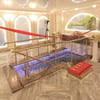
The aesthetics have evolved as well. While the mikvahs built prior to the Rebbe’s campaign were mostly as beautiful as a public swimming pool, the mikvahs of today surpass most spas, with imported mosaics, state-of-the-art privacy systems, and virtually every amenity imaginable.
This focus on making sure that the mikvahs are beautiful was part of the campaign from the very beginning. In fact, back in 1917, while World War One raged and the Bolshevik Revolution was about to explode, the Fifth Rebbe conducted a surprise visit to the mikvah in Rostov, Russia, and was disappointed to learn that the place was not as clean as it should have been.
“For me it makes no difference,” he told the caretaker. “I can use a mikvah which has insects floating on its surface and a bad odor in the room. But the women do not wish to suffer this. And if even a single woman, G‑d forbid, refrains from immersing herself in the mikvah because the water or the room is less than clean, one is causing the family to transgress and children to be born out of a state of impurity!”
This drive to make the mikvah as accessible, beautiful and attractive as possible remains the driving force behind the Taharat Hamishpachah campaign, which continues to unfold, blossom, and bear fruit well beyond what anyone could have imagined.
And Rostov, where the women once had to contend with insects and worse? A new mikvah was built by Chabad in the 1990s and has since been renovated several times, ensuring that Jewish families—no matter where they are—perform this mitzvah with joy and comfort.
The Jewish world is now celebrating fifty years since the Rebbe launched Mivtzah Taharat Hamishpacha, the international campaign to encourage couples to embrace mikvah in their marriages. Click here to learn more about mikvah, and visit Mikvah.org to find a mikvah near you and other resources.



Start a Discussion