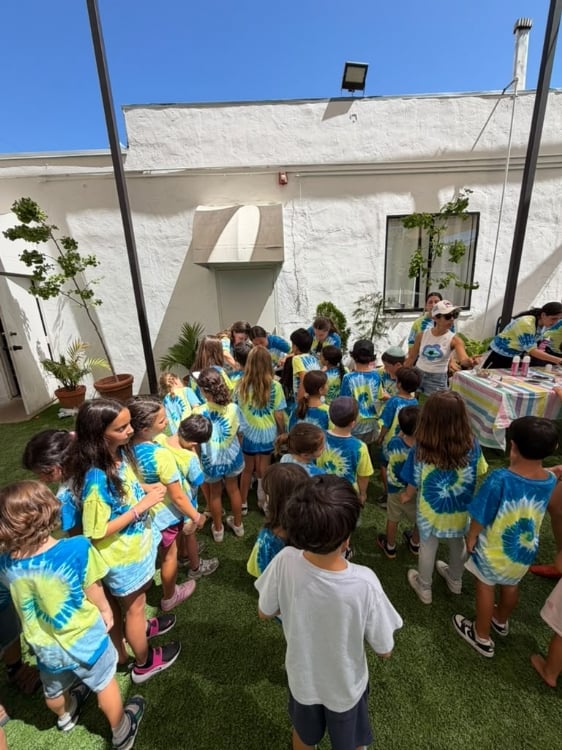
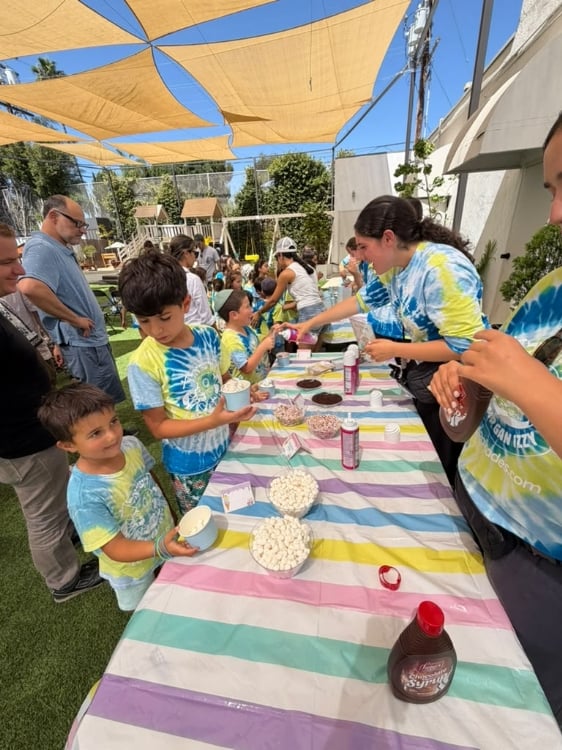
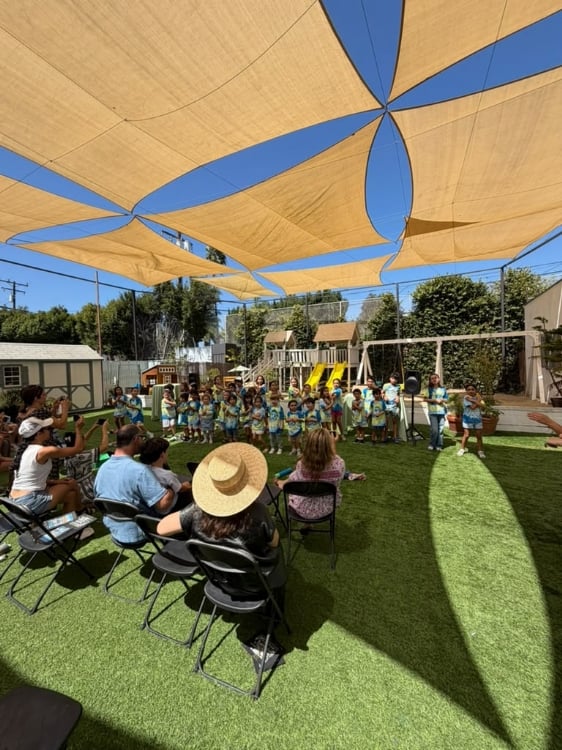
Can you see what I see?
ב"ה
Icon
Candle Lighting Time for
Pacific Palisades:
Friday, Aug. 7
7:31 pm

Message from the Rabbi

Dear Friend,

The Torah opens this week’s reading  with a powerful word: “Re’eh” — “See.” “See, I place before you today a blessing and a curse.”

Why does the Torah say see rather than simply listen?

Chassidic wisdom explains that seeing creates a certainty that hearing cannot. When you see something yourself, it becomes real. The Torah is asking us to look more deeply at our lives and recognize the blessings that G-d places before us each day.

There is a story of a Chassid who once complained to his Rebbe about the many difficulties in his life. The Rebbe listened and then said, “You have told me what is wrong. Now tell me what is right.”

The Chassid began slowly: his family, his health, his community, the ability to learn Torah and perform mitzvot. As the list grew, his entire expression changed.

Nothing outside the room had changed. But he had begun to see.

“Re’eh” is an invitation to develop Jewish eyes: to notice the good, to recognize G-d’s hand, and to see opportunities for blessing even where we might have overlooked them.

This Shabbat, may we open our eyes to the blessings already around us, and merit to see even greater blessings ahead.

Shabbat Shalom
Rabbi Zushe Cunin

Shabbat Schedule:

Shabbat, August 8
Morning Service: 10:00am
Followed by Kiddush & Refreshments

Shabbat Ends 8:28pm

Sunday, August 9
Shachris: 8:30am


 All Services take place at Chabad Palisades 17315 Sunset Blvd.

Recent Photos

This Week @ www.ChabadPalisades.com

  
By the Numbers
Extreme Judaism! 12 Facts About Jewish Life in the Polar Regions
While there isn’t a synagogue at the North Pole (yet!), there has been, and there still is, a Jewish presence not far from the Arctic and Antarctic Circles.
  
Your Questions
Why Do We Write Hebrew from Right to Left?
Learn the answer to this simple-seeming question in the light of history, Jewish law, and kabbalah.
  
Quiz
Take the Jewish Songs Quiz
Who composed the common tune for “Eishet Chayil”?
  
Freeman Files
What Is a Yetzer Hara and the Secret of Getting Rid of It?
The yetzer hara is an instinctive impulse for self-gratification (bad), embodied by the emotional responses of the beast within you.

Parshah in a Nutshell


Parshat Re'eh

The name of the Parshah, "Re'eh," means "See," and it is found in Deuteronomy 11:26.

“See,” says Moses to the people of Israel, “I place before you today a blessing and a curse”—the blessing that will come when they fulfill G‑d’s commandments, and the curse if they abandon them. These should be proclaimed on Mount Gerizim and Mount Ebal when the people cross over into the Holy Land.

A Temple should be established in "the place that G‑d will choose to make dwell His name there,” where the people should bring their sacrifices to Him; it is forbidden to make offerings to G‑d in any other place. It is permitted to slaughter animals elsewhere, not as a sacrifice but to eat their meat; the blood (which in the Temple is poured upon the altar), however, may not be eaten.

A false prophet, or one who entices others to worship idols, should be put to death; an idolatrous city must be destroyed. The identifying signs for kosher animals and fish, and the list of non-kosher birds (first given in Leviticus 11), are repeated.

A tenth of all produce is to be eaten in Jerusalem, or else exchanged for money with which food is purchased and eaten there. In certain years this tithe is given to the poor instead. Firstborn cattle and sheep are to be offered in the Temple, and their meat eaten by the kohanim (priests).

The mitzvah of charity obligates a Jew to aid a needy fellow with a gift or loan. On the Sabbatical year (occurring every seventh year), all loans are to be forgiven. All indentured servants are to be set free after six years of service.

Our Parshah concludes with the laws of the three pilgrimage festivals— Passover, Shavuot and Sukkot—when all should go to “see and be seen” before G‑d in the Holy Temple.

Learn: Re'eh in Depth
Browse: Re'eh Parshah Columnists
Prep: Devar Torah Q&A for Re'eh
Read: Haftarah in a Nutshell
Play: Re'eh Parshah Quiz

 

Today's Quote

Be humble before every man
— Ethics of the Fathers 4:10

Chabad World News