Counting What Cannot Be Counted
ב"ה
Icon
Candle Lighting Time for
Pacific Palisades:
Friday, May 15
7:31 pm

Message from the Rabbi

Dear Friend,

The Book of Bamidbar begins with a census. Every Jew was counted carefully, by name, family, and tribe. At first glance, it seems like a dry exercise in numbers. But there is a deeper message hidden inside the counting itself.

Usually, when something is counted, it becomes just another number in a larger system. Yet in Judaism, counting does the opposite. The counting was meant to reveal the infinite value of each individual soul. Moses did not count coins or cattle. He counted people, because every person carried a unique mission that no one else could fulfill.

The Chassidic masters point out a fascinating idea. The Jewish people were counted specifically in the wilderness, a place of emptiness and uncertainty. Why there? Because true worth is not dependent on comfort, success, or surroundings. Even in a spiritual wilderness, a Jew remains precious and essential.

Rabbi Levi Yitzchak of Berditchev once greeted a simple wagon driver with extraordinary warmth. His students were surprised. The Rabbi explained, “When G-d treasures a Jew enough to create him, who am I not to treasure him as well?”

Bamidbar reminds us that greatness is not found in becoming someone else. It is found in recognizing the Divine value already placed within us.

Shabbat Shalom,
Rabbi Zushe Cunin


Shabbat Schedule:

Shabbat, May 16
Morning Service: 10:00am
Followed by Kiddush & Refreshments

Shabbat Ends 8:31pm

Sunday, May 17
Shachris: 8:30am

All services take place at Chabad Castellammare
Please text Rebbetzin Zisi at (310) 628-4446 with any questions.

Recent Photos

This Week @ www.ChabadPalisades.com

  
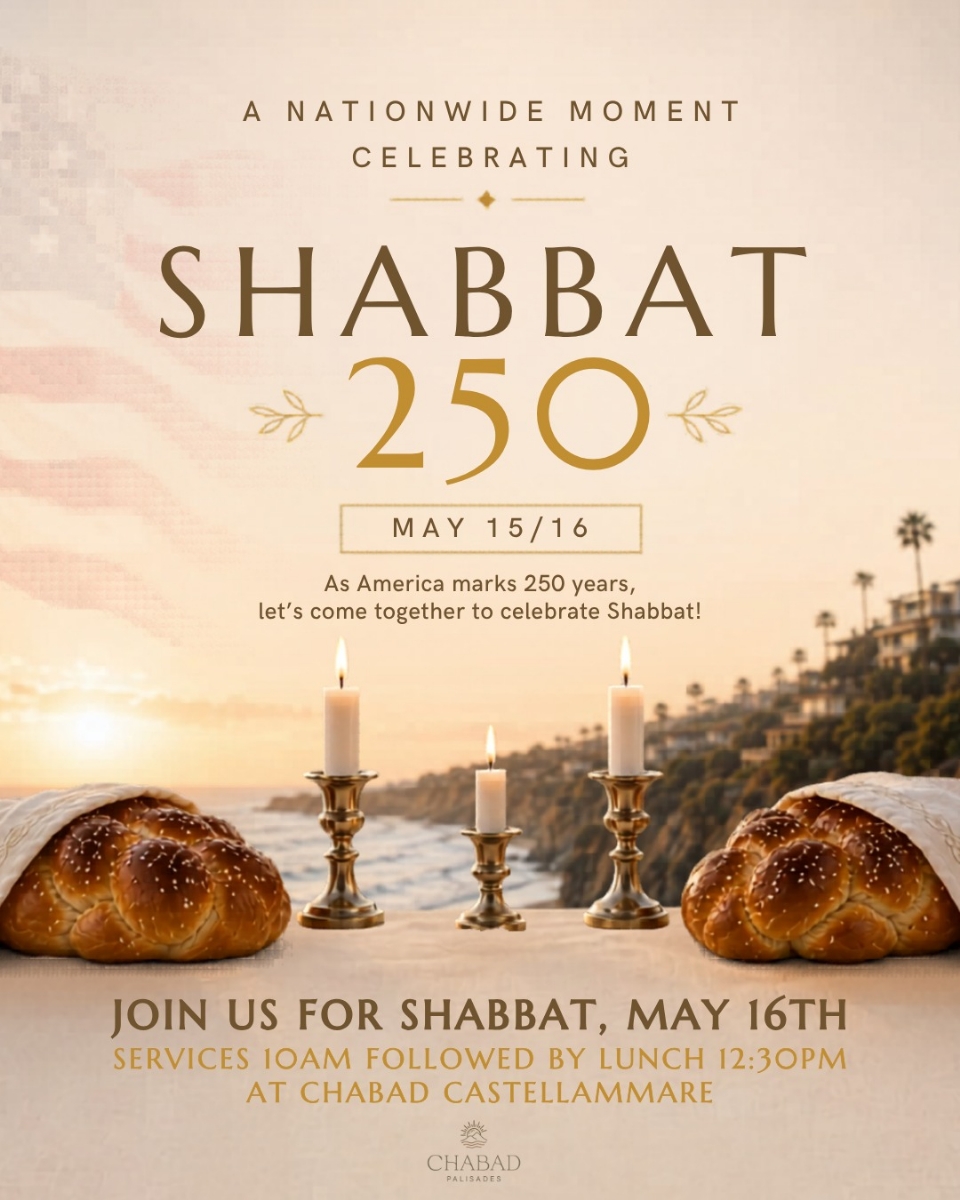
Shabbat 250
Celebrating Jewish Life in America 
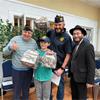
Join us for Shabbat 250
  
By the Numbers
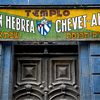
12 Facts About the Little-Known Jews of Cuba
In the decades leading up to the revolution, Cuba was home to a diverse and flourishing Jewish community with everything needed to live a full Jewish life.
  
History
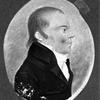
Mordechai Sheftall: Patriotic Officer, Prisoner of War, and Proud Jew
Mordechai Sheftall, 1735-1797, the highest-ranking Jew to serve in the American Revolution, was a devout Jew who stood strong in his beliefs and a fiercely patriotic American who suffered for his country.
  
Freeman Files
Is There a Flawless Proof That Torah Is True?
Many of the “facts of history” that are commonly accepted today are really quite questionable.

Parshah in a Nutshell


Parshat Bamidbar

The name of the Parshah, "Bamidbar," means "In the desert" and it is found in Numbers 1:1.

In the Sinai Desert, G‑d says to conduct a census of the twelve tribes of Israel. Moses counts 603,550 men of draftable age (20 to 60 years); the tribe of Levi, numbering 22,300 males age one month and older, is counted separately. The Levites are to serve in the Sanctuary. They replace the firstborn, whose number they approximated, since they were disqualified when they participated in the worshipping of the Golden Calf. The 273 firstborn who lacked a Levite to replace them had to pay a five-shekel “ransom” to redeem themselves.

When the people broke camp, the three Levite clans dismantled and transported the Sanctuary, and reassembled it at the center of the next encampment. They then erected their own tents around it: the Kohathites, who carried the Sanctuary’s vessels (the Ark, menorah, etc.) in their specially designed coverings on their shoulders, camped to its south; the Gershonites, in charge of its tapestries and roof coverings, to its west; and the families of Merari, who transported its wall panels and pillars, to its north. Before the Sanctuary’s entranceway, to its east, were the tents of Moses, Aaron, and Aaron’s sons.

Beyond the Levite circle, the twelve tribes camped in four groups of three tribes each. To the east were Judah (pop. 74,600), Issachar (54,400) and Zebulun (57,400); to the south, Reuben (46,500), Simeon (59,300) and Gad (45,650); to the west, Ephraim (40,500), Manasseh (32,200) and Benjamin (35,400); and to the north, Dan (62,700), Asher (41,500) and Naphtali (53,400). This formation was kept also while traveling. Each tribe had its own nassi (prince or leader), and its own flag with its tribal color and emblem.

Learn: Bamidbar in Depth
Browse: Bamidbar Parshah Columnists
Prep: Devar Torah Q&A for Bamidbar
Read: Haftarah in a Nutshell
Play: Bamidbar Parshah Quiz

 

Today's Quote

There's no understanding the character of this people! They're solicited for the Calf, and they give; they're solicited for the Mishkan - they give!
— Jerusalem Talmud

Chabad World News