The name of the Parshah, "Shemot," means "Names" and it is found in Exodus 1:1 - 6:1.
The
children of Israel multiply in Egypt. Threatened by their growing numbers,
Pharaoh enslaves them and orders the Hebrew midwives,
Shifrah and Puah, to kill all male babies at birth. When they do not comply, he commands his people to cast the Hebrew babies into the Nile.
A child is born to
Yocheved, the
daughter of Levi, and her husband,
Amram, and
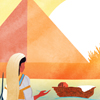
placed in a basket on the river, while the baby’s sister,
Miriam, stands watch from afar.
Pharaoh’s daughter discovers the boy, raises him as her son, and
names him Moses.
As a young man,
Moses leaves the palace and discovers the hardship of his brethren. He sees an Egyptian beating a Hebrew, and kills the Egyptian. The next day he sees
two Jews fighting; when he admonishes them, they reveal his deed of the previous day, and Moses is forced to flee to Midian. There he rescues
Jethro’s daughters, marries one of them (
Tzipporah), and becomes a shepherd of his father-in-law’s flocks.
G‑d appears to Moses in a burning bush at the foot of
Mount Sinai, and
instructs him to go to Pharaoh and demand: “Let My people go, so that they may serve Me.” Moses’ brother,
Aaron, is appointed to serve as his spokesman. In Egypt, Moses and Aaron assemble the elders of Israel to tell them that the time of their
redemption has come. The people believe; but Pharaoh refuses to let them go, and even intensifies the suffering of Israel.
Moses returns to
G‑d to protest: “
Why have You done evil to this people?” G‑d promises that the
redemption is close at hand.
Learn:
Shemot in Depth
Browse:
Shemot Parshah Columnists
Prep:
Devar Torah Q&A for Shemot
Read:
Haftarah in a Nutshell
Play:
Shemot Parshah Quiz