Light and Goodness Will Always Prevail!
|
|
|
|
|
|
This Week at Chabad of Pacific Palisades
|
|

|
|
|
|
|
|
|

|
Message from the Rabbi
|
|
|
|
|
|
This week’s Torah portion concludes with the commandment to remember Amalek. Amalek, the archenemy of the Jewish people, who so despised the Jews, that their raison d’etre became to wipe out the Jewish people..
The Jewish people have been commanded to remember what Amalek did to us, to our people, how they attacked us on our journey through the desert. They broadcast a message to the world that has not faded since, ‘it is okay to mess with the Jewish people, we did it first’. Before Amalek’s attack, everyone was in awe of this nation that was taken out of Egypt with the grace of G-d, afterwards, they were fair game, just like everyone else.
Therefore, we remember. We repeat Amalek’s evil-doing daily, we teach it to our children. For a nation that remembers is a nation that is prepared. Prepared for what? One might ask. The answer is that we are a nation prepared to eradicate Amalek’s name from this world. And how do we do this? We must look into our history, we must refresh our collective memory, for there lie the answers.
When Amalek attacked the Jewish people in the desert, the response of the Jews was two- fold, to pray to G-d, strengthening their faith, and to go to battle. When Haman decreed genocide upon the Jews, their response was two-fold once again, to fast and pray, and to battle their enemies. This pattern repeats itself throughout Jewish history, and therefore must teach us how to respond to the Amalek of our times.
First, we must strengthen our faith, like the Maccabees who had the odds stacked against them, we must never allow what appears to be a bleak reality to cloud our faith. We remember that G-d is with us and fighting for us. And then we go to battle, for G-d wants us to do what is needed to overcome our enemies..
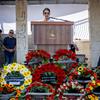
This week we remember the dark morning of September 11, 2001, the day when Amalek raised its ugly head and threatened what felt like impermeable safety. We remember that day and many days since then that echo that pain.
Therefore, we follow this commandment, we remember and never forget. We constantly strengthen our faith and our conviction. For G-d will erase evil, Amalek will be eradicated, and light and goodness will always prevail.
Shabbat Shalom,
Rabbi Zushe Cunin
|
|
|
|
|
|
|
|

|
Service Times
|
Kabbalat Shabbat at Chabad
6:30pm
Shabbat Morning Torah Study Class
9:00am
Shabbat Day Services
10:00am
Kiddush and Refreshments
12:30pm
|
|
|
|
|
|

|
Featured Event
|




Weekly Tanya Class with Rabbi Shimon
Sundays 8:00-8:30am at Chabad
Practical Tanya with Rabbi Zushe
Mondays 1:30-2:30pm at Chabad
Parsha Torah Study
Shabbat Morning 9:00am at Chabad
|
|
|
|
|
|

|
Recent Photos
|
|
|
|
|
|
|
|

|
Upcoming Events
|
JEC
Tuesday,
Oct. 8, 2024 - 3:30 pm - 5:30 pm |
|
|
|
|
|
|
|

|
Donate
|
Join in and become a partner in the work we do!
|
|
|
|
|
|

|
This Week @ www.ChabadPalisades.com
|
|
|
|
|
|
|
|

|
Parshah in a Nutshell
|
Parshat Ki Teitzei
The name of the Parshah, "Ki Teitzei," means "when you go out," and it is found in Deuteronomy 21:10.
Seventy-four of the
Torah’s
613 commandments (
mitzvot) are in the Parshah of
Ki Teitzei. These include the laws of the beautiful captive, the
inheritance rights of the firstborn, the wayward and rebellious son,
burial and dignity of the dead,
returning a lost object,
sending away the mother bird before taking her young, the duty to erect a
safety fence around the roof of one’s home, and the various forms of
kilayim (forbidden plant and animal hybrids).
Also recounted are the judicial procedures and penalties for adultery, for the rape or seduction of an unmarried girl, and for a husband who falsely accuses his wife of infidelity. The following cannot marry a person of
Jewish lineage: a
mamzer (someone born from an adulterous or incestuous relationship); a male of Moabite or Ammonite descent; a first- or second-generation Edomite or Egyptian.
Our
Parshah also includes laws governing the purity of the military camp; the prohibition against turning in an escaped slave; the duty to
pay a worker on time, and to allow anyone working for you—man or animal—to “eat on the job”; the proper treatment of a debtor, and the prohibition against charging
interest on a loan; the laws of
divorce (from which are also derived many of the laws of
marriage); the penalty of thirty-nine lashes for transgression of a Torah prohibition; and the procedures for
yibbum (“levirate marriage”) of the wife of a deceased childless brother, or
chalitzah (“removing of the shoe”) in the case that the brother-in-law does not wish to marry her.
Ki Teitzei concludes with the obligation to remember “what
Amalek did to you on the road, on your way out of Egypt.”
Learn:
Ki Teitzei in Depth
Browse:
Ki Teitzei Parshah Columnists
Prep:
Devar Torah Q&A for Ki Teitzei
Read:
Haftarah in a Nutshell
Play:
Ki Teitzei Parshah Quiz
|
| |
|
|
|
|
|
|

|
Today's Quote
|
| Just as with the mitzva of tefillin, for example, there is a designated place for them on the head and arm, and one feels the weight of the head-tefilla and the tightness of the hand-tefilla, so too with the mitzvot of love and fear of G-d... the fulfillment of these mitzvot is that there be a bodily sensation, that the very flesh of the heart actually feel; just as, for
example, [the love one feels] when one meets a truly devoted friend. — Hayom Yom, Av 20 |
|
|
|
|
|
|

|
Chabad World News
|
|
|
|
|
|
|
|
|