The name of the Parshah, "Bamidbar," means "In the desert" and it is found in Numbers 1:1.
In the Sinai Desert,
G‑d says to conduct a
census of
the twelve tribes of Israel.
Moses counts
603,550
men of draftable age (20 to 60 years); the tribe of
Levi, numbering 22,300 males age one month and older, is counted separately. The Levites are to serve in the
Sanctuary. They replace the
firstborn, whose number they approximated, since they were disqualified when they participated in the
worshipping of the
Golden Calf. The 273 firstborn who lacked a Levite to replace them had to pay a five-shekel “ransom” to redeem themselves.
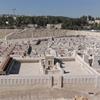
When the people broke camp, the three Levite clans dismantled and transported the Sanctuary, and reassembled it at the center of the next encampment. They then erected their own tents around it: the
Kohathites, who carried the Sanctuary’s vessels (the
Ark,
menorah, etc.) in their specially designed coverings on their shoulders, camped to its south; the Gershonites, in charge of its tapestries and roof coverings, to its west; and the families of Merari, who transported its wall panels and pillars, to its north. Before the Sanctuary’s entranceway, to its east, were the tents of Moses,
Aaron, and
Aaron’s sons.
Beyond the Levite circle, the twelve tribes camped in four groups of three tribes each. To the east were Judah (pop. 74,600), Issachar (54,400) and Zebulun (57,400); to the south, Reuben (46,500), Simeon (59,300) and Gad (45,650); to the west, Ephraim
(40,500), Manasseh (32,200) and Benjamin (35,400); and to the north, Dan (62,700), Asher (41,500) and Naphtali (53,400). This formation was kept also while traveling. Each tribe had its own nassi (prince or leader), and its own
flag with its tribal color and emblem.
Learn:
Bamidbar in Depth
Browse:
Bamidbar Parshah Columnists
Prep:
Devar Torah Q&A for Bamidbar
Read:
Haftarah in a Nutshell
Play:
Bamidbar Parshah Quiz