NO BLOOD FOR ME THANKS
ב״ה

 
This Week at Chabad of Pacific Palisades
Candle Lighting
Candle Lighting Times for
Pacific Palisades:
Friday, Mar. 29
6:55 pm
Torah Portion: Tzav / Parah
 

Chabad of Pacific PalisadesEmail: [email protected]Phone: 310-454-7783www.ChabadPalisades.com


Rabbi's Message
Message from the Rabbi
 
 
Dear Friend,

Jews are not allowed to consume blood. Even a tiny blood spot in an egg renders the egg forbidden for consumption (if it can’t be removed). The basis for this law is derived from two verses in this week’s Torah reading:

“And you shall not eat any blood in any of your dwelling places, whether from birds or from animals. Any person who eats any blood, that soul shall be cut off from its people.” (7:26-27)

The law is strict and leaves no room for ambiguity. This law demands that we go to great lengths to purge meat from blood, through a routine of salting and rinsing. We Jews have been doing this ever since the Torah was given until today in every community. Yet, ironically, the one people to avoid blood consumption at all costs has been accused by opportunistic rampant anti-Semites from the middle-ages until today of using human blood of Christian/Moslem children in the baking of our Matzot for Passover.

Why though is blood forbidden? In a later chapter G-d offers the following reason:

“For the soul of all flesh, its blood is in its soul…” (17:14)

The life force of a living animal is represented by the life supplying blood that courses through its veins. Although killing an animal in a humane way is an allowance made for mankind to eat, G-d wants us to still retain our sensitivity for all levels of life. Although we may take the life of an animal, taking life should not become routine. Life is sacred, the way we eat and what we do with the energy derived must also be sacred and dedicated to a higher cause. For if we are not elevating the animal through its absorption in us and our holy energy, what right do we have to take its life in the first place?

Shabbat Shalom,
Rabbi Zushe Cunin


Service Times
Service Times

Shabbat Day
10:00 am

Kiddush and Refreshments
12:30 pm


Featured Event
Featured Events

Weekly Torah Class with Rabbi Zushe
Thursdays @ 2pm

https://us02web.zoom.us/j/643045892?pwd=VXB3bUlIcEdTQjU0dnRLSVFRWlNjdz09 

Weekly Tanya Class with Rabbi Shimon
Sundays @ 8:00-8:30am at Chabad 


Upcoming Events
Upcoming Events
JEC
Tuesday, Apr. 2, 2024 - 3:30 pm - 5:30 pm
FC Sunday Circle
Sunday, Apr. 7, 2024 - 10:30 am - 11:30 am
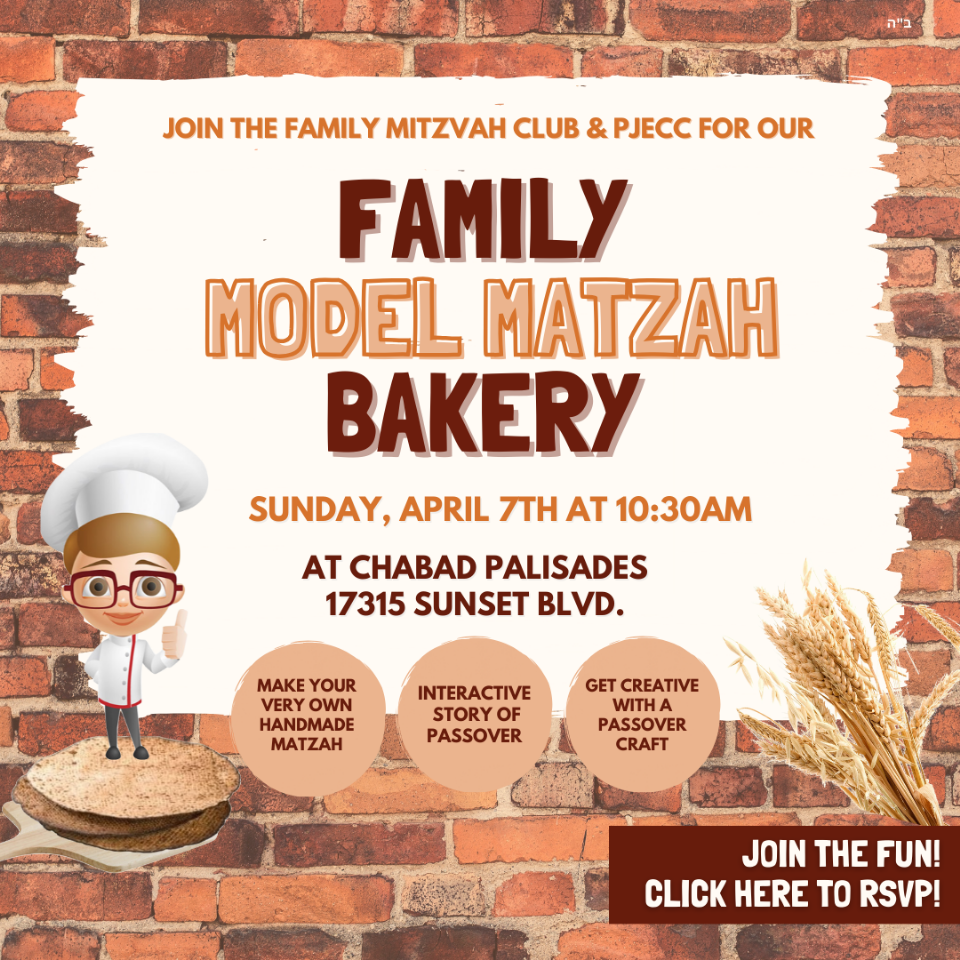
Family Model Matzah Factory
Sunday, Apr. 7, 2024 - 10:30 am
JEC
Tuesday, Apr. 9, 2024 - 3:30 pm - 5:30 pm
RCS- One WOW Moment
Monday, Apr. 15, 2024 - 7:30 pm - 9:00 pm
JEC
Tuesday, Apr. 16, 2024 - 3:30 pm - 5:30 pm
 
 
Recent Photos
Recent Photos
 
 
Condolences
Yahrtzeits


Donate
Donate

Join in and become a partner in the work we do!


This Week @
This Week @ www.ChabadPalisades.com
  
By the Numbers
10 Questions: Take the Temple Mount Quiz
What do you know about the holiest site in Judaism?
  
Your Questions
For Real, How Rare Is a Red Heifer?
A heifer is simply a fancy name for a young cow that hasn’t yet borne a calf. And the red is not ruby red.
  
Halachah for Life
What You Need to Know if You Said the Wrong Blessing
How to avoid the prohibition of taking G-d's name in vain.
  
Ordinary People; Extraordinary Stories
Terror Took Four Members of My Family
Orit Ettinger lost her father in a terrorist attack, her brother while working for the Mossad, her cousin saving Jews on October 7, and her brother in Gaza. Yet, she exudes faith, light, positivity, and hope.
 
 
Parshah
Parshah in a Nutshell

Parshat Tzav

The name of the Parshah, “Tzav,” means “command” and it is found in Leviticus 6:2.

G‑d instructs Moses to command Aaron and his sons regarding their duties and rights as kohanim (“priests”) who offer the korbanot ( animal and meal offerings) in the Sanctuary.

The fire on the altar must be kept burning at all times. In it are burned the wholly consumed ascending offering; veins of fat from the peace, sin and guilt offerings; and the “handful” separated from the meal offering.

The kohanim eat the meat of the sin and guilt offerings, and the remainder of the meal offering. The peace offering is eaten by the one who brought it, except for specified portions given to the kohen. The holy meat of the offerings must be eaten by ritually pure persons, in their designated holy place and within their specified time.

Aaron and his sons remain within the Sanctuary compound for seven days, during which Moses initiates them into the priesthood.

Learn: Tzav in Depth
Browse: Tzav Parshah Columnists
Prep: Devar Torah Q&A for Tzav
Read: Haftarah in a Nutshell
Play: Tzav Parshah Quiz



Parshat Parah

In preparation for the upcoming festival of Passover, when every Jew had to be in a state of ritual purity, the section of Parah (Numbers 19) is added to the weekly reading this week. Parah relates the laws of the Red Heifer with which a person contaminated by contact with a dead body was purified.


Today's Quote
Today's Quote
When G-d gave the Torah to the People of Israel, He said to them: "I require guarantors." Said the people: "The heaven and the earth shall be our guarantors." Said G-d: "They won't last forever." Said they: "Our fathers will guarantee it." Said He: "They are busy." Said they: "Our children will guarantee it." Said He: "These are excellent guarantors."
— Mechilta D'Rashbi


Chabad World News
Chabad World News