|
|
|
|
This Week at Chabad of Pacific Palisades
|
|

|
|
|
|
|
|
|

|
Message from the Rabbi
|
|
|
|
|
|
In last week’s Torah portion, we read about the Divine Revelation at Mount Sinai. In this week’s Torah portion, the Torah begins to fine tune the Jewish moral compass. The Torah has transitioned from the story-telling narrative that we have enjoyed for the past few months into an in-depth study of law.
We begin studying about the laws of slaves, we are taught what it means to have a slave according to Torah law. We are taught about the monotheistic legal system, and about judicial honesty. As the Torah enumerates law after law, we begin to form a guidebook
for moral and ethical behavior that will accompany the Jewish nation from their sojourn through the desert and into today’s modern society.
The order of the Torah is not happenstance, there is a clear reason for the layout of the Torah portions. A person may think that moral behavior is just what we would do naturally if we didn’t have the Torah as a guide. They may think that care for one’s
fellow, respect, honesty, and kindness are values that are ingrained in our psyche as human beings.
The fact that the study of these laws begins directly after the biggest event of Divine revelation in history teaches us that our value system is a G-dly value system. We can see clearly in society today, as well as in many societies throughout history, that when removed from a G-d based belief system, society begins to degenerate.
The revelation at Sinai made it clear that every human being is created in G-d’s image and is worthy to be treated as such. The laws we study now guide us through seemingly mundane occurrences and show us that G-d is not only found in books and synagogues, rather He is with us, guiding us, in every aspect of our daily lives.
Shabbat Shalom,
Rabbi Zushe Cunin
|
|
|
|
|
|
|
|

|
Service Times
|
Shabbat Day
10:00 am
Kiddush Lunch
12:45 pm
|
|
|
|
|
|

|
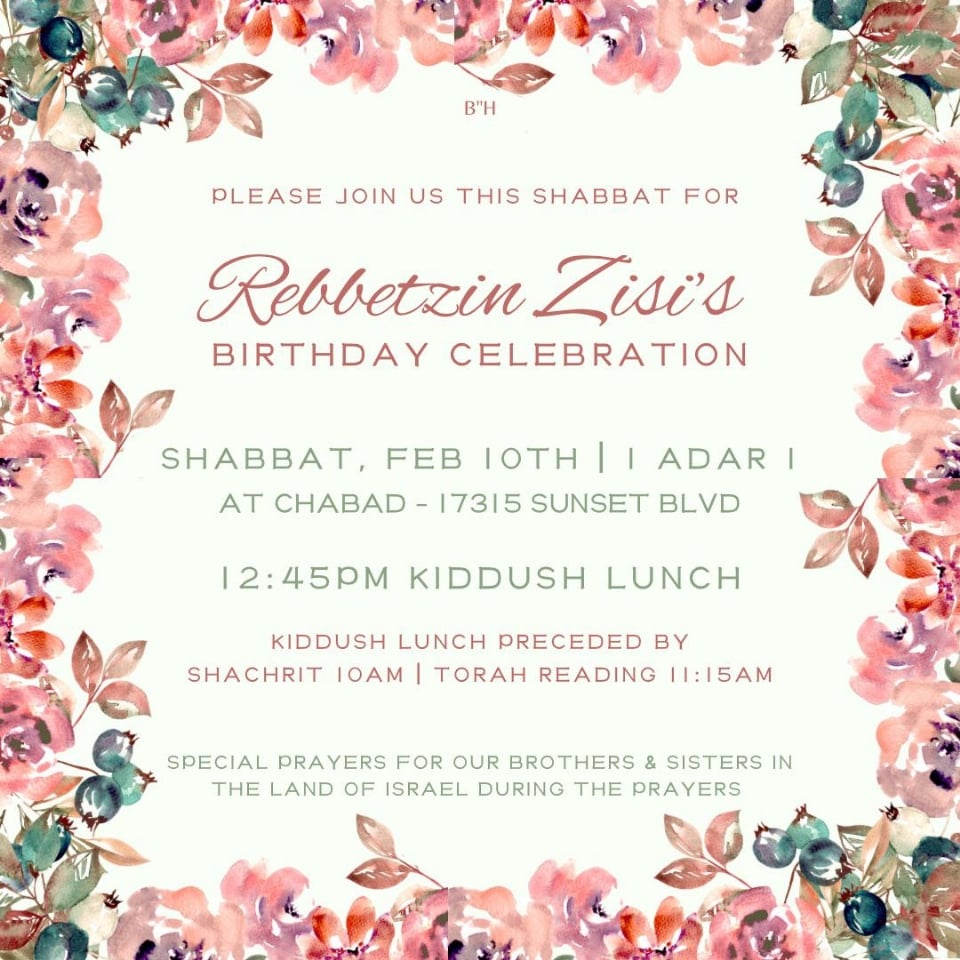
Please join us for Kiddush Lunch in honor of Rebbetzin Zisi's Birthday:
|
|
|
|
|
|
|
|

|
Featured Events
|
|
|
|
|
|
|
|

|
Upcoming Events
|
JEC
Tuesday,
Feb. 13, 2024 - 3:30 pm - 5:30 pm JEC
Tuesday,
Feb. 20, 2024 - 3:30 pm - 5:30 pm JEC
Tuesday,
Feb. 27, 2024 - 3:30 pm - 5:30 pm JEC
Tuesday,
Mar. 5, 2024 - 3:30 pm - 5:30 pm |
|
|
|
|
|
|
|

|
Recent Photos
|
|
|
|
|
|
|
|

|
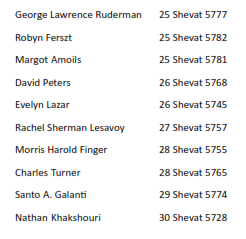
Yahrtzeits
|
|
|
|
|
|
|
|

|
Donate
|
Join in and become a partner in the work we do!
|
|
|
|
|
|

|
This Week @ www.ChabadPalisades.com
|
|
|
|
|
|
|
|

|
Parshah in a Nutshell
|
Parshat Mishpatim
The name of the Parshah, "Mishpatim," means "Ordinances" and it is found in Exodus 21:1.
Following the
revelation at Sinai,
G‑d legislates a series of laws for the people of Israel. These include the laws of the
indentured servant; the penalties for murder, kidnapping, assault and theft; civil laws pertaining to redress of damages, the granting of
loans and the responsibilities of the “
Four Guardians”; and the rules governing the conduct of justice by courts of law.
Also included are laws warning against mistreatment of
foreigners; the observance of the
seasonal festivals, and the agricultural gifts that are to be brought to the
Holy Temple in
Jerusalem; the prohibition against cooking
meat with milk; and the mitzvah of
prayer. Altogether, the
Parshah of Mishpatim contains 53
mitzvot—23 imperative commandments and 30 prohibitions.
G‑d promises to bring the people of Israel to the
Holy Land, and warns them against assuming the pagan ways of its current inhabitants.
The people of Israel proclaim, “
We will do and we will hear all that G‑d commands us.” Leaving
Aaron and
Hur in charge in the Israelite camp, Moses ascends
Mount Sinai and remains there for
forty days and forty nights to receive the
Torah from G‑d.
Learn:
Mishpatim in Depth
Browse:
Mishpatim Parshah Columnists
Prep:
Devar Torah Q&A for Mishpatim
Read:
Haftarah in a Nutshell
Play:
Mishpatim Parshah Quiz
|
| |
|
|
|
|
|
|

|
Today's Quote
|
| One who locks the doors of his courtyard and feasts and drinks with his children and wife on the festivals, but does not feed the poor and the embittered -- this is not the joy of mitzvah but the joy of his stomach — Maimonides |
|
|
|
|
|
|

|
Chabad World News
|
|
|
|
|
|
|
|